Source Dungeons and Dragons Custom Dice for Board Games
Compare 30 listings of Dungeons and Dragons custom dice available from verified suppliers. Buyers can evaluate options featuring hexahedron, octahedron, and icosahedron shapes made from acrylic or poly resin for educational and gaming applications.
Key considerations
Products List



Comprehensive Sourcing Guide
Strategic Sourcing Guide for Dungeons and Dragons Custom Dice
Technical Specifications and Material Composition
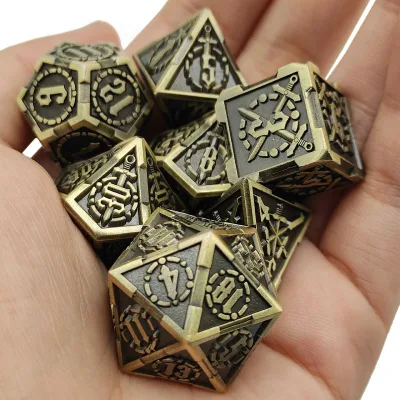
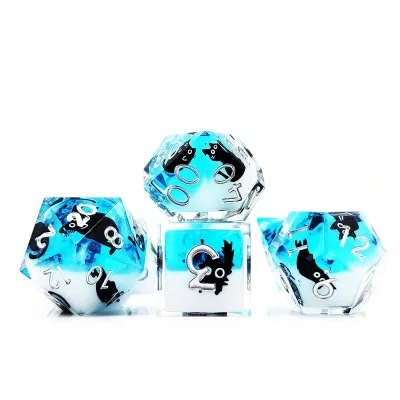
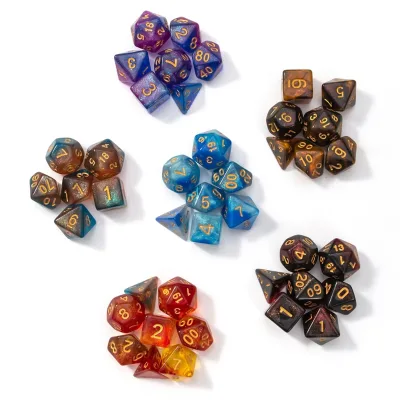
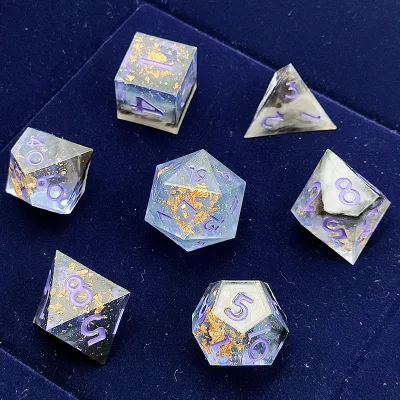
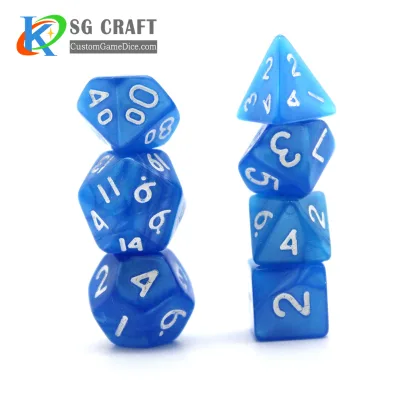
When sourcing custom dice for Dungeons and Dragons (D&D) campaigns, the primary technical differentiator lies in the material composition and geometric precision. The market offers a distinct range of options, primarily centered around Acrylic and Poly Resin. Acrylic dice are known for their high clarity and glass-like finish, often featuring mixed colors or single-color solid bodies. Poly Resin, alternatively, provides a heavier feel and is frequently utilized for marble or opaque color effects. Buyers must verify the specific plastic type for each order, as the choice between Acrylic and Poly Resin directly influences the tactile weight, sound, and visual depth of the final product.
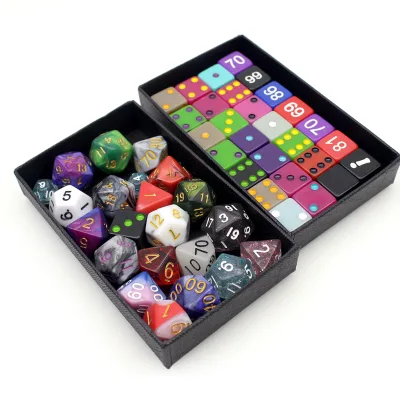
The geometric integrity of the dice is equally critical. While the core keyword focuses on D&D, the product landscape includes various shapes such as Hexahedrons (standard six-sided dice), Octahedrons, and Icosahedrons. The Icosahedron, with its twenty faces, is the standard for D&D percentile rolls, while Hexahedrons serve as the foundational tool for most tabletop mechanics. Sourcing guides must account for the fact that not all listed products support every shape; specific models are often designated for specific geometries. For instance, certain product lines are explicitly labeled as "16mm D6 DOT Dice," indicating a standardized size and dot-printing method, whereas others may offer "Marble Color" styles that require specific resin casting techniques.
Size specifications also vary significantly across the supply base. Standard dimensions typically range from 10mm to 30mm, with customization available for specific campaign needs. The "16mm" specification is a common baseline for D6 dice, but buyers should confirm the exact millimeter measurement for larger polyhedral sets to ensure they fit comfortably in hand and on standard gaming mats. Furthermore, the printing method is a key technical consideration. Options include "Printed Dice" with ink-based markings or "DOT Dice" where numbers are represented by raised or recessed dots. The choice between these affects readability and durability, particularly in low-light gaming environments.
Compliance and Certification Verification
In the realm of toy and game component manufacturing, compliance is not merely a formality but a prerequisite for market access, particularly when products are marketed with age ranges extending to younger demographics or general "All Ages" categories. The supply chain for custom dice often includes certifications such as CE, EN71, and ASTM F963-96A. These standards are critical for ensuring that the materials used, specifically the plastics and resins, do not contain harmful levels of heavy metals or phthalates.
Buyers must rigorously verify the presence of these certifications on a per-shipment basis. While the data indicates that CE, EN71, and ASTM F963-96A are available attributes within the product pool, it is an observation that not every listed item may carry all three simultaneously. The "ASTM F963-96A" standard, for instance, is a specific US safety standard for toy safety, while "EN71" is the European equivalent. The "CE" mark indicates conformity with health, safety, and environmental protection standards for products sold within the European Economic Area. When sourcing for international distribution, the procurement strategy must align with the destination market's regulatory requirements.
Additionally, the "Age Range" attribute presents a complex compliance landscape. Some products are categorized for "14 Years & Up," while others are listed for "8 Years," "Adult," or "All Ages." This discrepancy necessitates a careful review of the product's intended use and the associated safety warnings. A product marketed as an "Educational Toy" or "DIY Toy" often falls under stricter toy safety regulations compared to items designated strictly for adult hobbyists. Buyers should request specific test reports or certification documents that match the declared age range of the product to avoid regulatory penalties. The "Condition" is typically listed as "New," but verifying that the manufacturing process maintains this condition through packaging and shipping is essential to prevent damage that could compromise safety or usability.
Cost Drivers and Pricing Dynamics
The pricing structure for custom dice is influenced by a confluence of factors, including material type, customization level, and order volume. The observed price range in the market spans from $0.03 to $10.20 USD per unit, a wide variance that reflects the diversity of product configurations. The lower end of the spectrum typically corresponds to standard, non-customized acrylic or resin dice with simple dot printing, often sold in bulk. Conversely, the higher price points are associated with complex customization, such as specific marble color effects, unique packaging, or small-batch production runs.
Minimum Order Quantity (MOQ) is a significant cost driver in this sector. The observed MOQ range extends from 2 units to 30,000 units. For small-scale buyers or those testing a new product line, the ability to order as few as 2 units is a critical enabler. However, the unit cost for these small orders will likely be at the higher end of the price spectrum. As the order volume increases, economies of scale come into play, reducing the per-unit cost. Buyers must balance the upfront capital required for larger MOQs against the long-term savings in unit pricing.
Customization is another primary cost factor. The "Customized" brand attribute and the availability of "Custom Gemstone Dice" or "Custom Party Dice" indicate that personalization is a core service offering. Customization can involve altering the color scheme, modifying the shape, or adding specific branding to the dice or packaging. The "Standard" attribute is listed as "customized" for many items, suggesting that the baseline production is flexible. However, this flexibility often incurs a setup fee or a higher unit price compared to off-the-shelf inventory. Buyers should also consider the "Product Packing" options, which range from simple plastic bags to set-up boxes and outer cartons. Enhanced packaging solutions, while adding value to the end-user experience, will increase the total landed cost.
Typical Applications and Market Segmentation
The application of custom dice extends beyond simple gaming mechanics into educational and recreational settings. The "Toy Department" is listed as "Unisex," indicating a broad market appeal that transcends gender-specific marketing. The "Genre" is identified as "Educational," suggesting that these products are often utilized in learning environments to teach probability, mathematics, or strategic thinking. The "Teaching Mode" is described as "Instructions," implying that the dice sets may come with guides or are designed to be used in structured learning activities.
In terms of physical application, the "Board Type" and "Application" fields reveal a diverse usage landscape. While the core keyword is Dungeons and Dragons, the data shows applications in "Chess-and-Card Room," "Home," and general "Board Game" scenarios. The "Wei Chi" and "Chinese Checkers" board types indicate that these dice are versatile enough to support various traditional and modern board games. The "Time" attribute, ranging from 0.5 to 2 hours, suggests that these products are optimized for short-to-medium duration gaming sessions, making them suitable for casual play or educational workshops.
The "Level of Difficulty" is noted as "Intermediate," which aligns with the complexity of D&D mechanics and other strategy games. This positioning suggests that the target audience includes experienced gamers who appreciate the nuance of polyhedral dice. The "Expansion Pack" attribute being "Yes" further supports the idea that these dice are part of a larger ecosystem of gaming accessories, allowing players to expand their collections or customize their gameplay experience. The "Keyword" tags such as "Custom Gemstone Dice," "D&D Dice," and "Custom Party Dice" highlight the specific niches within the broader market, from high-end collectibles to party favors.
Supplier Evaluation and Operational Capabilities
Evaluating a supplier for custom dice requires a focus on their production capabilities, flexibility, and logistical reliability. The "Made in China" origin is a common attribute in this sector, offering a competitive advantage in manufacturing costs but requiring careful management of logistics and quality control. The "Brand" attribute is listed as "Customized," indicating that many suppliers operate on an OEM (Original Equipment Manufacturer) or ODM (Original Design Manufacturer) model, allowing buyers to put their own branding on the products.
Buyers should assess the supplier's ability to handle the "Member" count, which ranges from 4 to 10 players, or even greater than 10. This metric is crucial for determining the size of the dice sets required for different gaming groups. The "Type" of product is listed as "DIY Toys," which may imply that some suppliers offer kits for assembly or customization, adding a layer of complexity to the sourcing process. The "Prod Model" numbers, such as 718, 544, 1163, 720, 717, and 595, serve as specific identifiers for different product lines. Buyers should request detailed catalogs or datasheets for these specific models to understand the exact specifications and availability.
The "Prod Packing" options, including "Plastic Bag," "Set up Box," and "Outer Carton," indicate the supplier's packaging capabilities. A robust supplier should be able to provide customized packaging solutions that protect the dice during transit while enhancing the unboxing experience for the end customer. The "Standard" attribute being "customized" suggests that the supplier is flexible regarding production standards, but buyers must clearly define their quality expectations to ensure consistency. The "Condition" being "New" is a baseline requirement, but buyers should verify that the supplier has processes in place to maintain this condition throughout the supply chain.
Quality Control and Long-Term Procurement Strategies
Maintaining quality in custom dice production requires a proactive approach to quality control (QC). Given the precision required for polyhedral dice, even minor deviations in shape or weight can affect gameplay. Buyers should implement a QC protocol that includes visual inspections for surface defects, such as bubbles in the resin or uneven coloring. Dimensional checks are essential to ensure that the dice meet the specified size ranges, such as the 10-30mm standard or the specific 16mm D6 DOT Dice.
Long-term procurement strategies should focus on building a relationship with suppliers who demonstrate consistency in their "Prod Standard" and "Prod Model" offerings. The "Customized" nature of the brand and product lines means that communication is key. Buyers should establish clear specifications for color, material, and printing methods to avoid misunderstandings. The "Expansion Pack" availability suggests that suppliers may offer future-proofing options, allowing buyers to add new dice types or colors to their existing product lines without significant retooling costs.
Sustainability and material safety are also becoming increasingly important in long-term strategies. Verifying that the "Plastic Type" (Acrylic or Poly Resin) meets environmental standards can be a differentiator in the market. Buyers should inquire about the recyclability of the materials and the packaging. The "Certification" status, including CE, EN71, and ASTM F963-96A, should be reviewed annually to ensure ongoing compliance with changing regulations. Finally, the "Lead Time" and "MOQ" flexibility should be negotiated to align with the buyer's inventory management needs, ensuring a steady supply of high-quality dice for their customers.
FAQs
What certifications are available for these custom dice?
Available certifications include CE, EN71, and ASTM F963-96A. These standards ensure the acrylic or poly resin materials meet safety requirements for toys and games intended for various age ranges.
Which material types are used for the dice?
The dice are manufactured using Acrylic or Poly Resin. Acrylic offers high clarity while poly resin provides a heavier feel with marble or opaque color effects for different gaming aesthetics.
Can I order custom packaging for these dice?
Yes, customization is available for product packing options. Buyers can choose from plastic bags, set-up boxes, or outer cartons, with some suppliers offering fully customized packaging solutions.
What is the minimum order quantity for these items?
The minimum order quantity ranges from 2 to 30,000 units depending on the specific product model. Smaller orders allow for testing, while larger volumes often reduce the per-unit cost significantly.
How long does the production lead time typically take?
Production time is generally estimated between 0.5 to 2 hours for setup and assembly. However, actual lead times for shipping depend on order volume and specific customization requirements like color or shape.
What shapes are available for Dungeons and Dragons dice?
Available shapes include Hexahedron, Octahedron, and Icosahedron. These geometries support standard D6 rolls as well as percentile and other polyhedral mechanics required for complex tabletop role-playing games.